India’s recent burst of diplomacy has come with a clear message: trade, supply chains and strategic influence are no longer separate conversations.
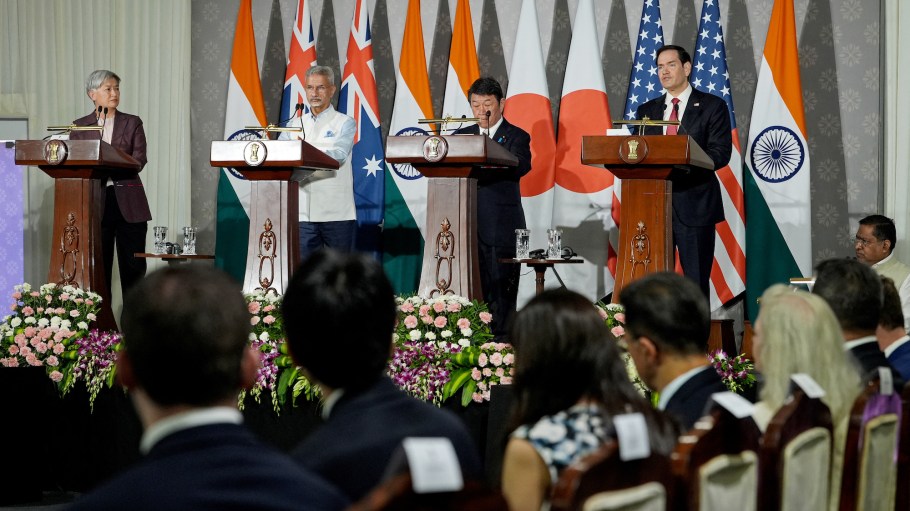
Over the past several weeks, New Delhi has hosted a steady stream of high-level meetings including U.S. Secretary of State Marco Rubio’s talks with prime minister Narendra Modi and external affairs minister S. Jaishankar, followed by the long-planned gathering of foreign ministers from the Quadrilateral Security Dialogue (Quad as it is referred) on Tuesday.
Related Stories
Rubio’s first visit to India as secretary of state was framed on both sides as a reaffirmation of ties, even as economic friction and supply chain realignment continue to shape the wider relationship. U.S. officials said India was not being singled out for punitive trade measures, even as Washington pushes partners to reduce exposure to concentrated supply chains and strategic dependencies.
“Our nations are strategically aligned on all of the key issues that will define the new century,” Rubio said at a joint press conference with India’s external affairs minister on Sunday.
He outlined the fact that a strategic alliance could be made, but only a handful of countries could do something on a global scale—that have “both the economic and diplomatic power to be influential on strategic issues from a global perspective, and India is one of them.”
Analysts noted that Rubio’s first visit to India was being seen as an important step in restructuring a vastly damaged relationship with the U.S, as logistics and sourcing and concerns have stepped up over the last year.
This, as Rubio made clear that New Delhi had not been singled out for punishment, and the aggressive “U.S. trade and tariff actions were part of a global perspective meant to address macroeconomic imbalances, rather than being targeted specifically at India.”
Supply chain resilience has also been one of the important agenda items as the Quad meeting of foreign ministers from the United States, Japan, Australia and India met in New Delhi on Tuesday. The meetings unfolded alongside weeks of delegations of central government officials from across India meeting to discuss trade pressure, manufacturing costs and investment concerns.
At the same time, India continues to position itself as both a manufacturing alternative and a long-term supply chain hub, particularly as global companies reassess production bases in Asia.
But while India projects outward confidence, pressure is building domestically on the cost side of that ambition.
A delegation of apparel exporters and textile industry representatives met Vice President Jagdeep Dhankhar this week and renewed calls for the government to withdraw the 11 percent import duty on cotton, warning that rising raw material costs are eroding competitiveness.
The meeting followed separate discussions with commerce and industry minister Piyush Goyal, agriculture minister Shivraj Singh Chouhan and textiles minister Giriraj Singh, where industry bodies made the same demand.
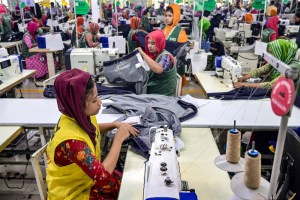
Representatives from major textile associations in the Tirupur cluster—including the Tirupur Exporters’ Association (TEA), Southern India Mills’ Association and South India Hosiery Manufacturers Association—said shortages of quality raw cotton were tightening margins across spinning mills and downstream manufacturing units.
Industry groups warned that smaller exporters were being hit first, with rising input costs already feeding into pricing pressure in overseas markets and threatening order stability and impacting the industry growth. According to figures from The Confederation of Indian Textile Industry (CITI) apparel exports in April registered a degrowth of 11.66 percent over the last year.
During the discussions, the delegation highlighted the challenges being faced by the apparel and textile industry due to high cotton prices and rising input costs. “The industry representatives emphasized that India has recently entered into several Free Trade Agreements, creating significant opportunities for growth in textile and apparel exports. However, competing apparel exporting nations are able to access cotton at internationally competitive prices, whereas Indian manufacturers continue to face higher raw material costs due to the prevailing import duty structure,” Dr. A. Sakthivel, chairman AEPC, told Sourcing Journal.
Other members of the delegation explained it further.
“Reduction in import duty on cotton is essential to help the Indian apparel industry secure greater business opportunities from FTA partner countries and enhance India’s competitiveness in the global market. Neighboring competing countries enjoy better access to competitively priced raw materials, enabling them to offer more competitive pricing in international markets,” an industry representative noted.
While the reduction in import duty on cotton will help the entire textile value chain, the industry’s next steps are also key to correcting overall supply chain issues.
Other industry heads from across the country echoed the point with urgency, particularly in view of the escalating costs due to the conflict in the Middle East and the need to balance the wish for India to become a larger player in global supply chains while managing domestic cost pressures.
CITI released a comprehensive study on India’s cotton sector jointly prepared by Swiss consulting firm Gherzi and the International Cotton Advisory Committee (ICAC) earlier this month, flagging the adverse impact of the 11 percent import duty on cotton, particularly in view of the shortage of cotton production over the last year.
Chandrima Chatterjee, CITI secretary general, said India has shifted from a comfortable cotton surplus before the pandemic to a growing deficit that is expected to widen further.
“As a result, we will need to fill this deficit through imports and ensure a regular supply of imported cotton,” she said, adding that competing textile exporters including Bangladesh, Vietnam, Indonesia, Pakistan and Turkey impose zero duty on cotton imports. Some countries, such as Vietnam, have even exempted cotton imports from VAT to strengthen competitiveness.
The study, “Economic Analysis of Cotton Supply, Pricing, and Trade Policy in India,” was released along with a dynamic discussion on the impact the shortfall of cotton is making on the industry.
The comprehensive study was conducted during October to April. Navdeep Singh Sodhi, a partner from the Gherzi Textil Organization, told Sourcing Journal, it takes into account the present situation, possible opportunities for the Indian cotton industry, the challenges it faces, and finally, the policy imperatives.
“The first message is about the demand and supply gap—and Vision 2030,” he said highlighting the government target of $350 billion exports, which would need a step-up across the value chain.
“It is important to understand how the availability of cotton impacts the achievements of those ambitious targets—to take cognizance of the fundamental fact that India’s cotton balance sheet over the past decade has moved from a gradual but decisive shift from periodic surpluses to a structurally tighter market, in which domestic production of cotton no longer fully supports the requirements of the textile value chain.”
Going forward to achieve the $350 billion target, he said India will require approximately 20 to 21 million tons of natural and man-made fiber of which 8 million tons must be cotton.
The present domestic production of cotton is approximately 5 million tons, leaving a shortfall of 3 million tons and the gap between fiber needs and domestic availability is only expected to widen, he said.
Sodhi said India’s cotton production costs have become increasingly uncompetitive compared with major producers such as Australia, the U.S. and Brazil. While production costs per hectare remain relatively competitive, lower yields per hectare have sharply increased costs on a per-kilo basis.
“As yields have declined, the cost per kilo of cotton has increased significantly,” Sodhi said, adding that the government has had to raise the minimum support price (MSP) year after year, with consequences for the broader textile industry.
He said improving productivity would be critical in the long term and welcomed the government’s recent cabinet decision to inject substantial funding into cotton productivity initiatives. “We believe this is a step in the right direction,” Sodhi said.
The industry is also grappling with what Sodhi described as a “structural misalignment” between domestic cotton prices and international benchmarks. Cotton, cultivated across more than 60 countries and traded globally, must remain price competitive for India’s textile sector to compete internationally, he said.
Instead, Indian mills are paying significantly higher prices than rivals in countries such as Bangladesh, Vietnam, Indonesia and China. Many of those countries import cotton but still secure supplies at internationally competitive prices, placing Indian manufacturers at a disadvantage.
“The disparity between India’s domestic price and the international price has put the Indian textile industry at a huge disadvantage,” Sodhi said.
Industry leaders warned that persistent supply-demand gaps, elevated domestic cotton prices, import tariffs and concerns over cotton quality have eroded the competitiveness of India’s textile sector in recent years. The fallout has included idle manufacturing capacity, job losses, weaker investment and stagnant exports.
Sodhi warned that urgent recognition of the situation was the need of the hour, with short, medium and long-term interventions needed to revive the sector and help India achieve its target of building a $350 billion textile industry.
While providing a roadmap for the way ahead, the essential point was the need to acknowledge and make the interventions with intent. “All hands have to be on deck,” he said.